Fostering
Cinematography in Canada Since 1957
The CSC has grown with the country’s film and television industry, and continues to uphold the objectives for which the not-for-profit organization was founded.
2026 AWARDS | CALENDAR | SUBSCRIBE | BECOME A MEMBER
Latest News & Events
-
Congratulations to the 2026 CSC Awards Winners.
Find Out More -
Van Royko csc shares the creative and technical process behind the documentary.
Find Out More -
Jeff Maher csc and his work on Death of a Yellow Bird.
Find Out More
Scheduled Workshops
The CSC is committed to improving access to opportunity in the film and television industry as well as professional development in the form of workshops, our internship program and the Field of View Mentorship program.
Latest Posts
Open
 Open
Open
Open
Open
Open
Open
Open
Open
Open
Open
Open
Open
Open
Open
Follow us on Instagram
@matjbarkley #matjbarkley #AssociateMemberCSC
Alright that’s the end of my jaunt down memory lane. Hopefully in another 15 years I’ll have accrued twice as many tips from even more great collaborators. Thank you to the @canadiancinematographer for the invitation and the community,
I’ve mentioned it in pieces throughout my posts but the crew who show up every single day we work are the only thing that stands between these projects winding up as some brainstorm that never gets made.
The amount of people it takes to develop and propel just my single career forward is unfathomable and I appreciate every single one of those boosts (and kicks in the ass) in ways I’ll never be able to proper express.
To all of the Agents, Directors, Crews, Writers, Producers, Post Teams, Agency/Clients and everyone else I’ve ever had the pleasure of working with,
The Rental Houses and Production Companies with their invaluable support,
My parents, partners, family and friends that have taken care of me over the years and made space for this thing that gives me so much joy,
Thank you!
MB
@mantlreps.tv @ascentcreatives
@matjbarkley #matjbarkley #AssociateMemberCSC
I used to think I was missing out when I travelled for work because I’d get home a few weeks later and feel like I’d seen the whole thing through a viewfinder instead of my own eyes. I’ve since decided (or maybe rather realized) it’s well worth the trade off to get to meet and work with the many wonderful people who are (generally) so hospitable and keen to show off their community and the talent in it.
I’ve flown for work on a WIDE variety of budgets/scale but they all pay off in their unique way. Swipe for some quick highlights of some of the more memorable projects starting with Scotland w @by.chrisbrown
A dream job if there ever was one, we spent the better part of 2 weeks roaming around Scotland following a very flexible and adventurous itinerary Chris made. No lighting, no support aside from each team captain @sabatins / each other and it turned up some of my favourite simple story telling ever - all put together by the wonderful @caaaaaaaaaaaam and @wadeodlum
@matjbarkley #matjbarkley #AssociateMemberCSC
I used to think I was missing out when I travelled for work because I’d get home a few weeks later and feel like I’d seen the whole thing through a viewfinder instead of my own eyes. I’ve since decided (or maybe rather realized) it’s well worth the trade off to get to meet and work with the many wonderful people who are (generally) so hospitable and keen to show off their community and the talent in it.
I’ve flown for work on a WIDE variety of budgets/scale but they all pay off in their unique way. Swipe for some quick highlights of some of the more memorable projects starting with Scotland w @by.chrisbrown
A dream job if there ever was one, we spent the better part of 2 weeks roaming around Scotland following a very flexible and adventurous itinerary Chris made. No lighting, no support aside from each team captain @sabatins / each other and it turned up some of my favourite simple story telling ever - all put together by the wonderful @caaaaaaaaaaaam and @wadeodlum
India was one of my very first international trips / shoots and one that developed very organically during visits to the workshop
@matjbarkley #matjbarkley #AssociateMemberCSC
My third feature @sweetnessthemovie was with director @emmaaverage who I had only worked with once beforehand and who I will now bury a body for at a moments notice.
I havent quite had the time to build out the post I wanted to for this project but one thing we did during prep (usually with our wonderful PD @electaporado ) was photo board (on location) as many of the “big” scenes as we could. This allowed Emma and I to work through blocking (while leaving room for her to expand with actors on the day) in a way that would let me be as prepared as possible from a lighting stand point and Electa to know how much of a certain space we were seeing / focusing on. It also gave us a great document to give to crew during prep so we could discuss a scene and know everyone was on the same page visually.
On features of this size budget I’ve only ever gotten 1-2 days of tech scouting with my gaffer + key grip which is really only enough time to talk about general ideas / what directions we’ll be looking. Because of that we found ourselves on set discussing specifics of the following week and I made a lot of maps / annotated call sheets (a practice I’ve become very fond of on narrative) to share with G/E + Camera departments.
1st AC @ontario.peach Gaffer @shaneoson Key Grip @t.emms.grip
@matjbarkley #matjbarkley #AssociateMemberCSC
Dish Pit is the 2nd of 3 short films that I’ve had the joy of shooting with @annabanana_hops and our first to land at both @tiff_net and @vimeostaffpicks
Working with Anna has been a dream for me as a cinematographer because she shows up with such strong ideas about how she wants her scripts to feel and then gives me space to pitch her on different ways we can achieve those feelings visually.
Dish Pit was technically fairly simple but we spent a lot of time during prep in the actual location (@dannyspizzatavern for all your dining needs) rehearsing, blocking and planning out the shoot. It paid off because watching @mattyg0uveia + @austin__hutchings perform felt like witnessing real life play out right in front of us.
Our small but very mighty crew spent three days overnight in August and we had some of the most fun I’ve ever had on set (and ate the best thanks to chef @jonathan_neville_pde
For more info on Dish Pit check out Annas interview with @directorsnotes / the full credits on Vimeo and for a sneak peek at our next project swipe all the way to the end!
@matjbarkley #matjbarkley #AssociateMemberCSC
I made the move from Halifax to Toronto in May of 2017 which puts me very close to a full decade in the city.
Nova Scotia provided me a few connections to Toronto but for the most part I spent my first year (or more) doing as much cold calling (emailing) as I could manage. It can be an uncomfortable part of our industry but I’m not sure there’s a better way to inject yourself into a new “market” than getting out and meeting people in person, even if it’s just for a 15m visit at their office.
At some point somebody very smart told me that no one would (or even could) help me with my goals unless they knew what those goals were. There’s a time and a place of course but communicating to folks what it is you want to be doing more of in the future seems to be one of the best ways to move ahead (and help narrow down your own dreams).
I’m not sure if it’s the film industries communal spirit but I’ve always found Toronto as a city much warmer and open than I was lead to believe before moving here. Even something that felt as intimidating as approaching agencies like @seslercompany and @mantlreps.tv wound up being very encouraging conversations that would go on to become invaluable professional (and thankfully also very familial) relationships.
There’s been so many incredible people and projects in the last 10 years that have made living and working in Toronto more than worth it. The east coast will always be home but I do feel like I have 2 of those now.
I really encourage anyone interested in the job to join / get in touch with the CSC as much as you can (in Toronto or anywhere else in Canada!). Having the mentorship programs, social events and technical support (the FB group is incredible for problem solving) etc has been indispensable to me and goes a long way towards making a somewhat competitive position feel a lot less lonely.
@matjbarkley #matjbarkley #AssociateMemberCSC
A quick post about some of the tools I find indispensable both on set and off. A lot of these have already been mentioned by previous hosts but I figure a little confirmation bias can’t hurt.
First up is a Segway. Prior to these I was using a pair of rollerblades for cheap and quick handheld operating and what an upgrade its been. I’ve had a lot of practice to get to the comfort level I’m at now but I strongly encourage anyone to give them a shot (maybe with a dumbbell instead of a camera at first), it’s really very intuitive once you get going.
Maybe a little less accessible but all my years of playing hockey have made my ice skates another really valuable tool for very specific jobs.
@scenario_app is my new absolute favourite tool for floor plans / mapping out location information to share with crew. It’s not free but the developers are constantly releasing new tools and taking feedback directly from the community of users.
@shotdeck has become the first place I go when I’m looking for inspiration. It’s so easy to burn hours flipping through reference to reference and I often wind up on a completely different genre than I started in with 5 new movies I want to watch.
@cadrageapp has been my go to digital viewfinder of late and I don’t think there’s any other app on my phone that has been more worth the cost.
This one is a bit of a luxury but I built myself out a “tree” covered in accessories that make my day on set easier and more organized. I can ask our VTR teams for a 17” monitor to work off, or even if I’m handheld operating that day it gives me a place to hang all of my personal items so that I don’t wind up asking the camera team if they’ve seen everything I’ve put down in dumb places over the day
@prismlensfx has been making some of the absolute best filters for adding some extra sauce to a shot but I’ve also been collecting a lot of much cheaper and easier to find pieces for years. If you’re on a budget the glass shelf at your local second hand store is a great place to start as well as the dollar store.
A pocket knife and a green laser go a long way towards making my life easier on set. Th
#MatBarkley #associatemembercsc @matjbarkley
For this OLG spot @alon_isocianu and I spent a lot of time in prepro talking about what he envisioned for the VFX and how those elements should interact with + light the set / talent. We had a few more experimental ideas (including lasers) but ultimately decided to “simplify” and I pitched him an overhead rig that would play anytime the “ThrillWave” was introduced.
My ideas were immensely improved once @kaython and Cliff got ahold of them with the final design consisting of a softbox with a Vortex Creamsource at the top, diffusion around the 3/4 mark and skirted all the way to the bottom where we lined the pipe w 8x titan tubes. All suspended via truss + st25s so we could tweak our position and height on the day.
Big thanks to @mjcherringtn for his help developing the techno dolly plans and incredible execution on the day and to @andrewhmorton + his team for the lovely sets and design.
Swipe to the end to see the spot in motion, these pieces really don’t do the VFX justice.
Every shot had to be done in 2 plates, a PRE ThrillWave (pictured here) and a ThrillWave version (previous and following slides)
With Board Op @samlebelwong we were able to use the vortex to augment our ambient night, cue it to a slow pink pulse and then trigger the tubes to run a blue chase sequence, giving us a great motion effect. We also added a @mossleddotcom panel to the tablet screens so we could “burst” from neutral white to “thrillwave” blue and then dial down to let the overhead effect spread through the room.
During prep @alon_isocianu builds some of the best camera / lens accurate previs I’ve ever seen. I’ll work with him via zoom to adjust lens / camera moves until we’ve found something he loves. The final product is absolutely priceless for communicating to crew what we’re after on set @cinema4drender
Pre vis materials, particularly @cinetracer @cinema4drender and Andrew’s incredible set designs, also allowed us to feel confident with our translite sizing which we used to reduce VFX load and encourage as many reflections as possible.
Enthusiastically we fully intended on solving the window reflection at 14s practically
#MatBarkley #associatemembercsc @matjbarkley
At first glance “Mattress Firm” might not sound like the kind of commercial to get excited about but director @marcus_tortorici pushed hard in his treatment and during prep to tackle each world with intention and style. Ultimately we got to shoot some really fun scenes and I thankfully took some decent notes.
In the next few slides I’ll break down the lighting for the 660fps football scene, the gel trick we used to shoot day4night INT without tenting and some general “video boarding” that always helps us figure out shots during prep.
Swipe all the way to the end for the finished product
@voyager.tv @alfredofilms @mantlreps.tv @ascentcreatives
We entertained going Phantom for 900fps but we due to budget constraints we would’ve had to use the Phantom for the regular speed stuff and that wasn’t an option. This was my first time pushing the Alexa35 Xtreme to the extent of its slow motion abilities and I was really impressed. Dropping resolution to 2k isn’t so much an issue for me as is the sensor crop. Realistically though, carrying a few extra really wide lenses for the chance to shoot 660fps on such a great camera is well worth it.
In order to light for 660 FPS @ 800ei (ideally @ t2.8 w 2 additional stops of wiggle room for close ups etc) we put 20x SpaceForces in a 15x15 soft box and hung 3x XT52 on truss for backlights about 20’ from the subject. On the floor we had 2x V24’s as front fill and 2x XT52s as side lights
(and by we I mean our amazing Gaffer @kaython and Key Grip Cliff)
We hit the mark right on the nose. We were maxed on the soft box but had a little wiggle room on the XTs. Since we wanted the world to fall off around our players we were lighting for a relatively small amount of space. As that size increased we would have needed more and more firepower.
We entertained going Phantom for 900fps but we due to budget constraints we would’ve had to use the Phantom for the regular speed stuff and that wasn’t an option. This was my first time pushing the Alexa35 Xtreme to the extent of its slow motion abilities and I was really impressed. Dropping resolution to 2k isn’t so much an issue for me as is
Purchase Latest Editions
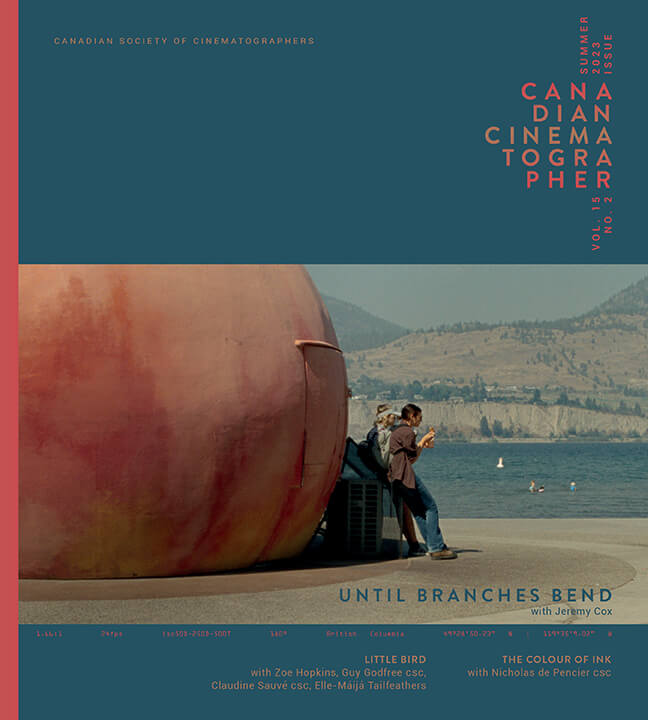
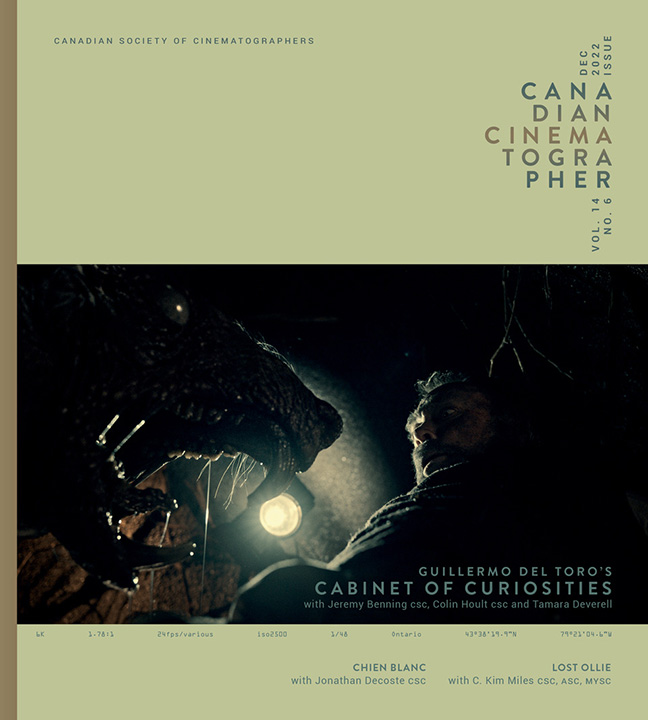
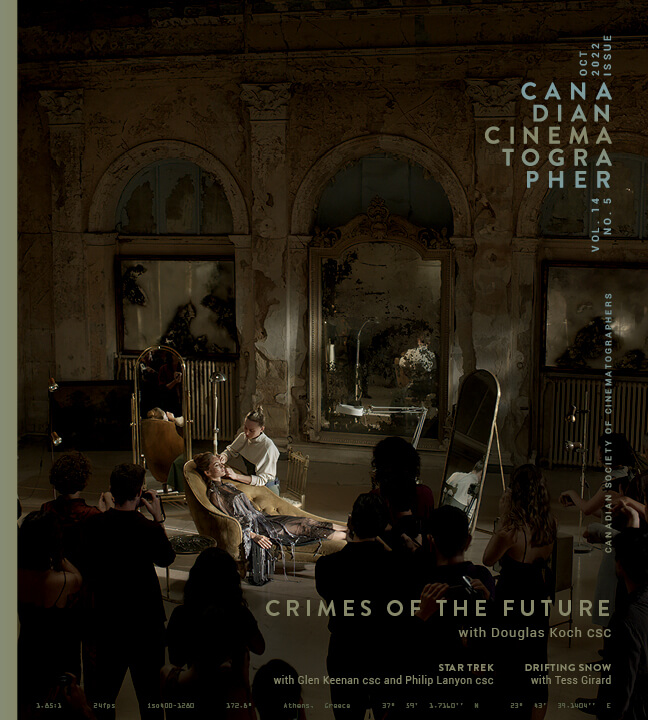
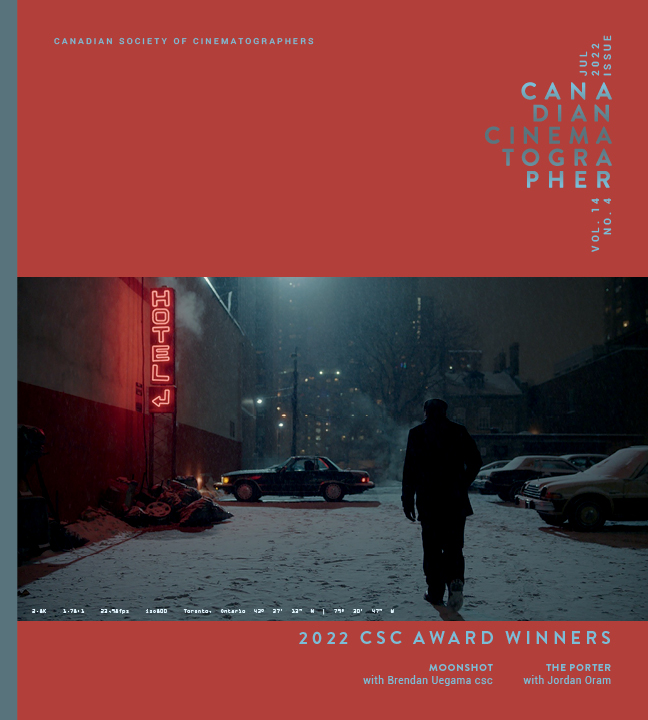
Canadian Cinematographer Magazine